3 hr 30 min
Khasab Dhow Cruise with Dolphin Spotting & Snorkeling
- Entry ticket
- Mobile voucher
- Valid same day
- Free cancellation
Musandam Private Dhow Cruise — Traditional Sailing & Fjord Discovery
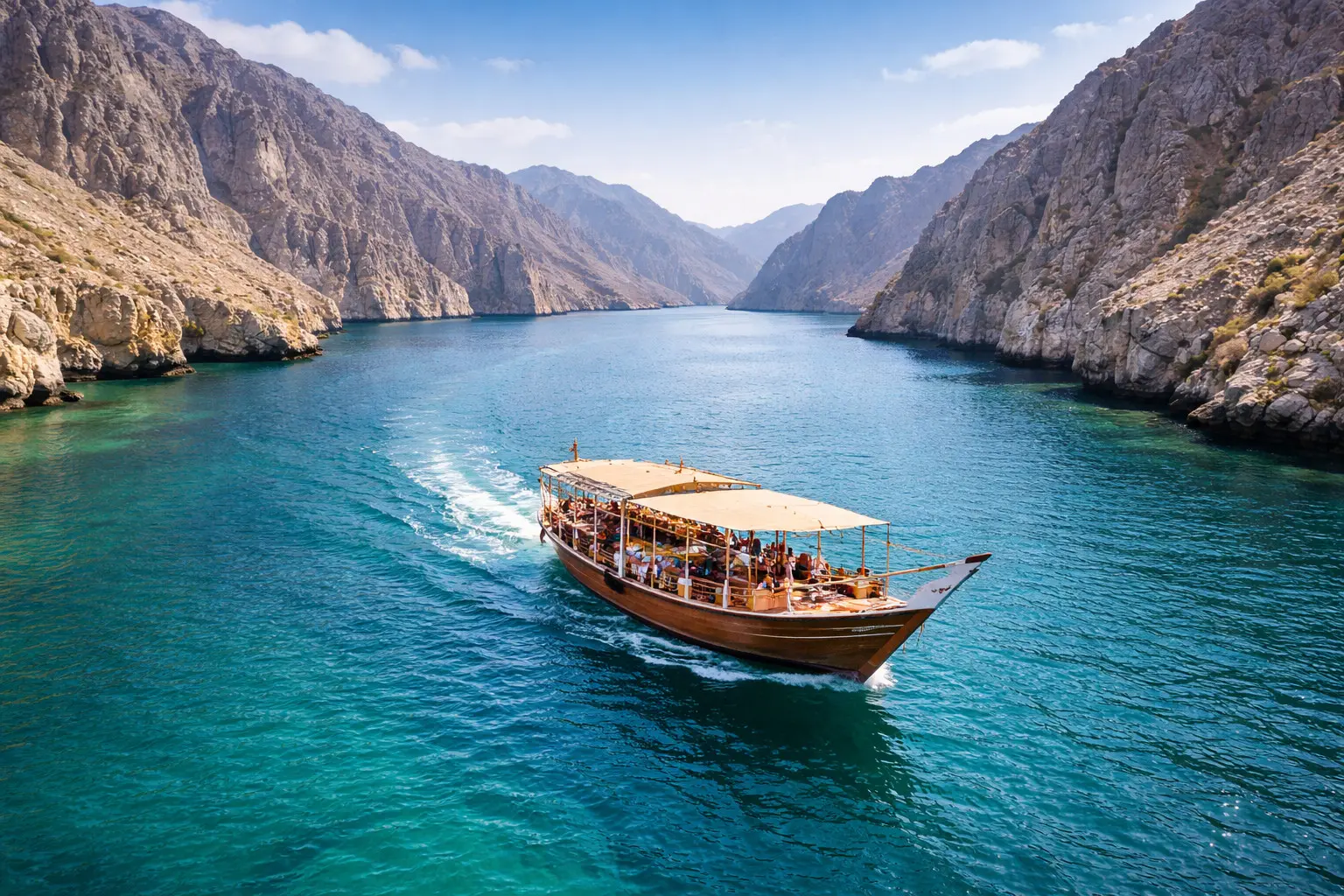
Glide through Arabian fjords, where limestone cliffs meet turquoise water
Compare fares, pick the fit — all bookings are mobile-voucher and eligible for free cancellation where shown.
3 hr 30 min
5 hr
4 hr
| Experience | Duration | Rating | Pickup | Lunch | Free cancel. | Price | |
|---|---|---|---|---|---|---|---|
|
Standard Entry
Most popular
Khasab Dhow Cruise with Dolphin Spotting & Snorkeling
|
3 hr 30 min | ★ 4.9 | ✓ | — | ✓ | €32 | Book → |
|
Standard Entry
Musandam Fjords Dhow Cruise with Dolphin Watching
|
5 hr | ★ 4.9 | — | ✓ | ✓ | €47 | Book → |
|
Standard Entry
Khasab Fjord Dhow Cruise with Dolphin Watching & Snorkeling
|
4 hr | ★ 4.8 | ✓ | — | ✓ | €44 | Book → |
Worth it for those seeking tailored experiences
A musandam private dhow cruise delivers three tangible advantages over shared departures: flexible itinerary control, personalized crew attention, and privacy for your group. You dictate snorkeling duration at Telegraph Island, swimming stops in secluded coves, and departure timing—morning slots maximize dolphin encounters in calmer fjord waters before midday winds pick up. The dedicated crew adjusts lunch service and route pacing to your preferences, eliminating the rigid schedule of group tours. For couples seeking uninterrupted Musandam fjords exploration or families needing child-friendly swim breaks, the premium justifies itself through autonomy. Solo travelers or budget-conscious pairs find better value in standard dhow cruise options that cover identical routes—dolphin watching, Khor Ash Sham fjords, and snorkeling gear—at lower per-person rates. The investment pays dividends when flexibility matters: celebrating occasions privately, accommodating elderly travelers who need rest intervals, or photographers chasing specific Telegraph Island angles without group constraints.
Bottom line: The premium delivers measurable control and privacy—justify the cost by using that flexibility fully.
They complement each other; most visitors who do both call a private musandam private dhow cruise the more personal and flexible choice for groups seeking tranquility.
|
Top pick Private Dhow |
Shared Dhow | |
|---|---|---|
| Group size | Private group only | 10–30 passengers |
| Flexibility | Fully customizable itinerary | Fixed, rigid schedule |
| Price | From 1,000 OMR per boat | From 15 OMR per person |
| Privacy | Exclusive vessel access | Shared public space |
| Departure time | Flexible per your choice | Fixed morning departures |
| Inclusions | Premium meal customization | Standard buffet lunch |
| Atmosphere | Quiet, personalized, intimate | Social, lively, communal |
| See tickets & prices |
Verdict: Choose a private musandam private dhow cruise tour if you desire full control over your schedule and onboard privacy, whereas a shared musandam private dhow cruise tickets option is superior for solo travelers and budget-conscious visitors.
Hand-picked experiences loved by thousands of travelers
1 day (approximately 12 hours including transfers)
Free Cancellation
Sail the stunning Khor Ash Sham fjord aboard a traditional dhow, spot dolphins, and snorkel crystal-clear waters
6 hours
Free Cancellation
Sail through dramatic coastal inlets aboard an authentic Omani vessel with swimming stops and dolphin encounters
12 hours 30 minutes
Free Cancellation
Full-day voyage through Oman's dramatic coastline with snorkeling, island stops, and dolphin encounters
1 day
Free Cancellation
Sail through dramatic Omani fjords on a traditional wooden dhow with snorkeling, dolphin spotting, and lunch
23 hours
Free Cancellation
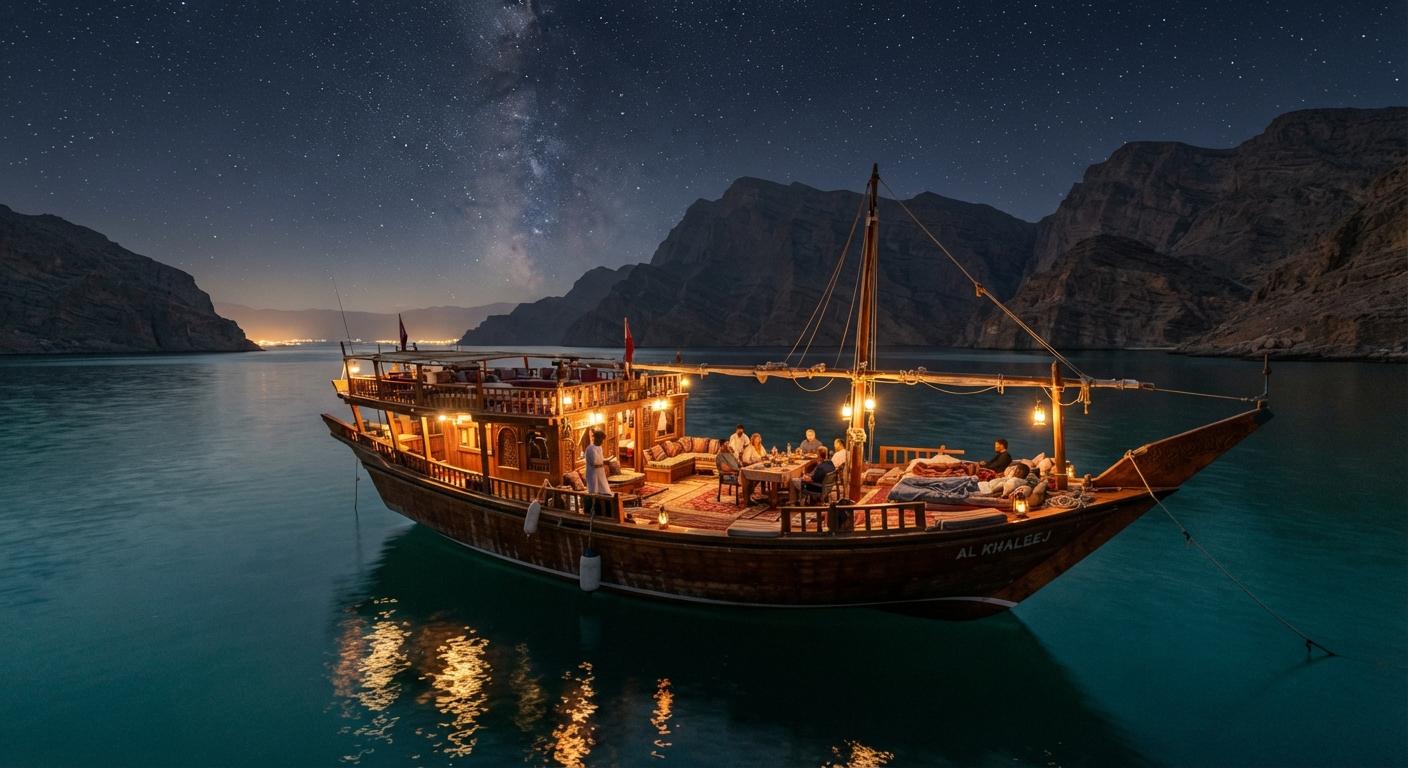
Sleep under the stars on a traditional Omani boat while exploring dramatic fjords, snorkeling, and dolphin watching
6 hours
Free Cancellation
Sail through dramatic fjords, snorkel crystal-clear waters, spot dolphins, and savor lunch aboard a traditional dhow
6 hours
Free Cancellation
Full-day private dhow voyage through Oman's dramatic fjords with wildlife encounters and water sports
A historic telegraph relay station built by the British in 1864, surrounded by clear snorkeling waters.
Renowned for its calm, shallow waters, this spot is ideal for observing vibrant marine life and coral reefs.
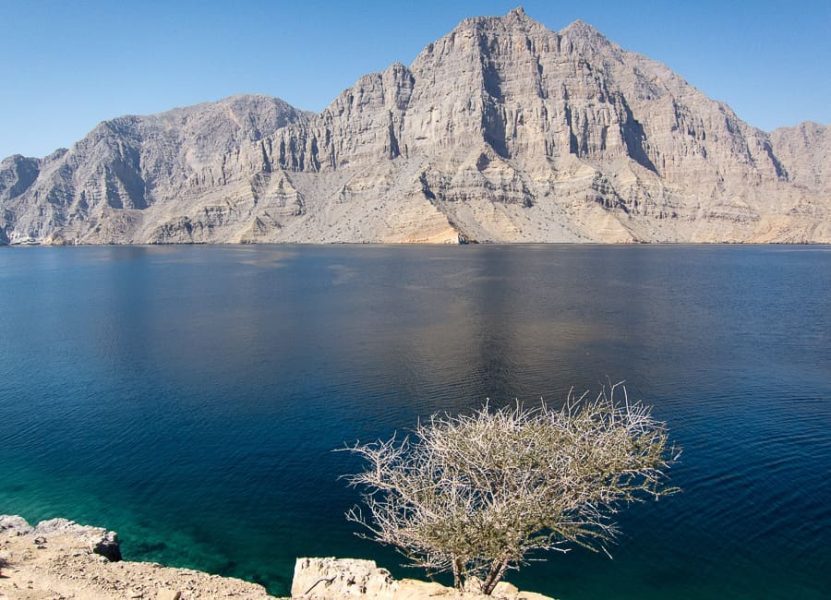
The most spectacular fjord in the region, featuring dramatic limestone cliffs rising from the turquoise sea.
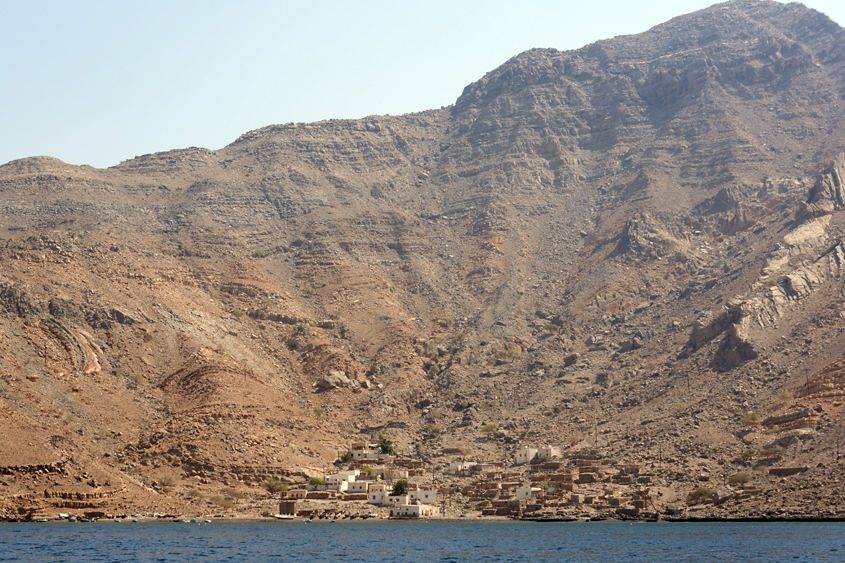
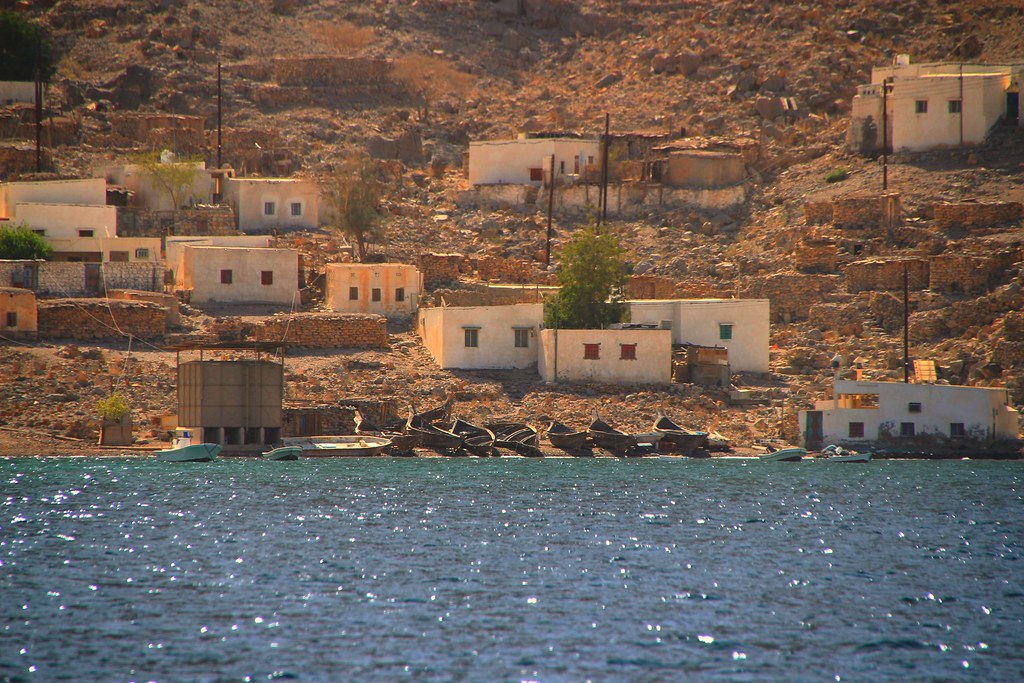
One of the ancient fishing villages along the coast accessible only by traditional dhow.
A quiet, remote coastal settlement that showcases traditional Omani maritime heritage.
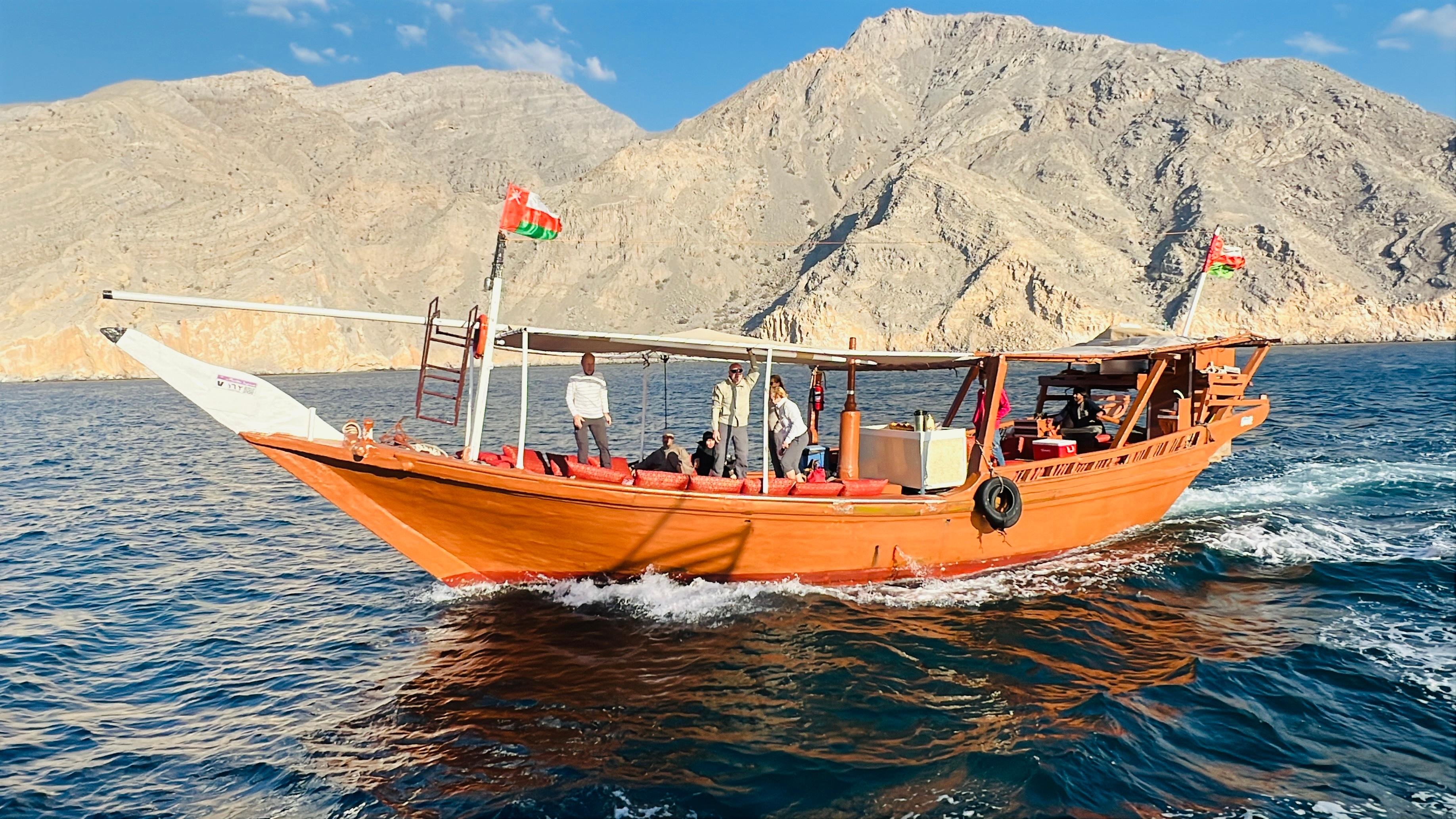
You board the dhow at Khasab Port just after 09:30, stepping from the concrete jetty onto polished teak decking. The crew casts off, and the diesel engine hums as the dhow curves past moored fishing boats toward the first khor entrance.
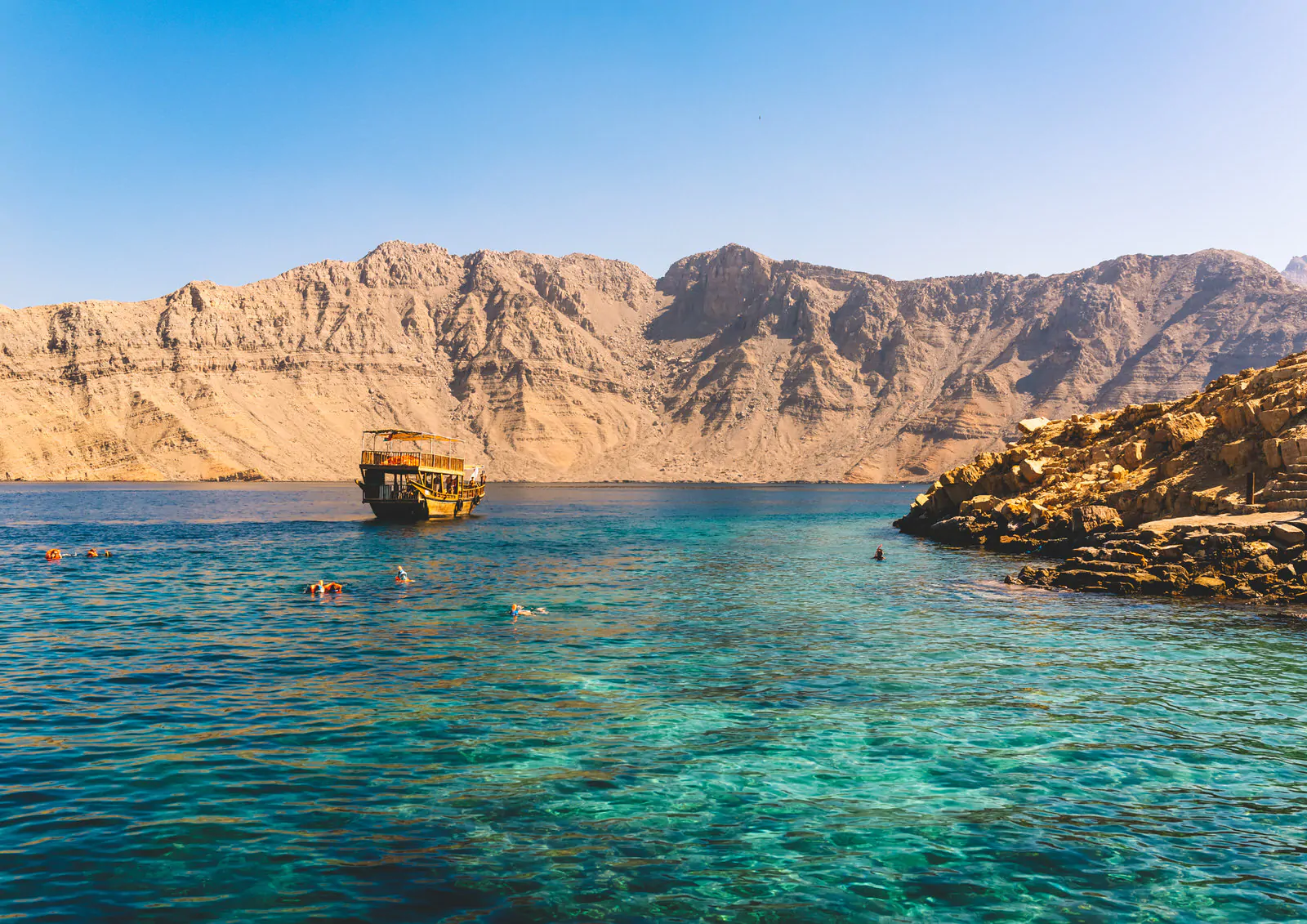
Within 15 minutes, limestone walls replace the harbor's industrial skyline, rising in vertical strata that shift from grey to rust-red as the sun climbs.
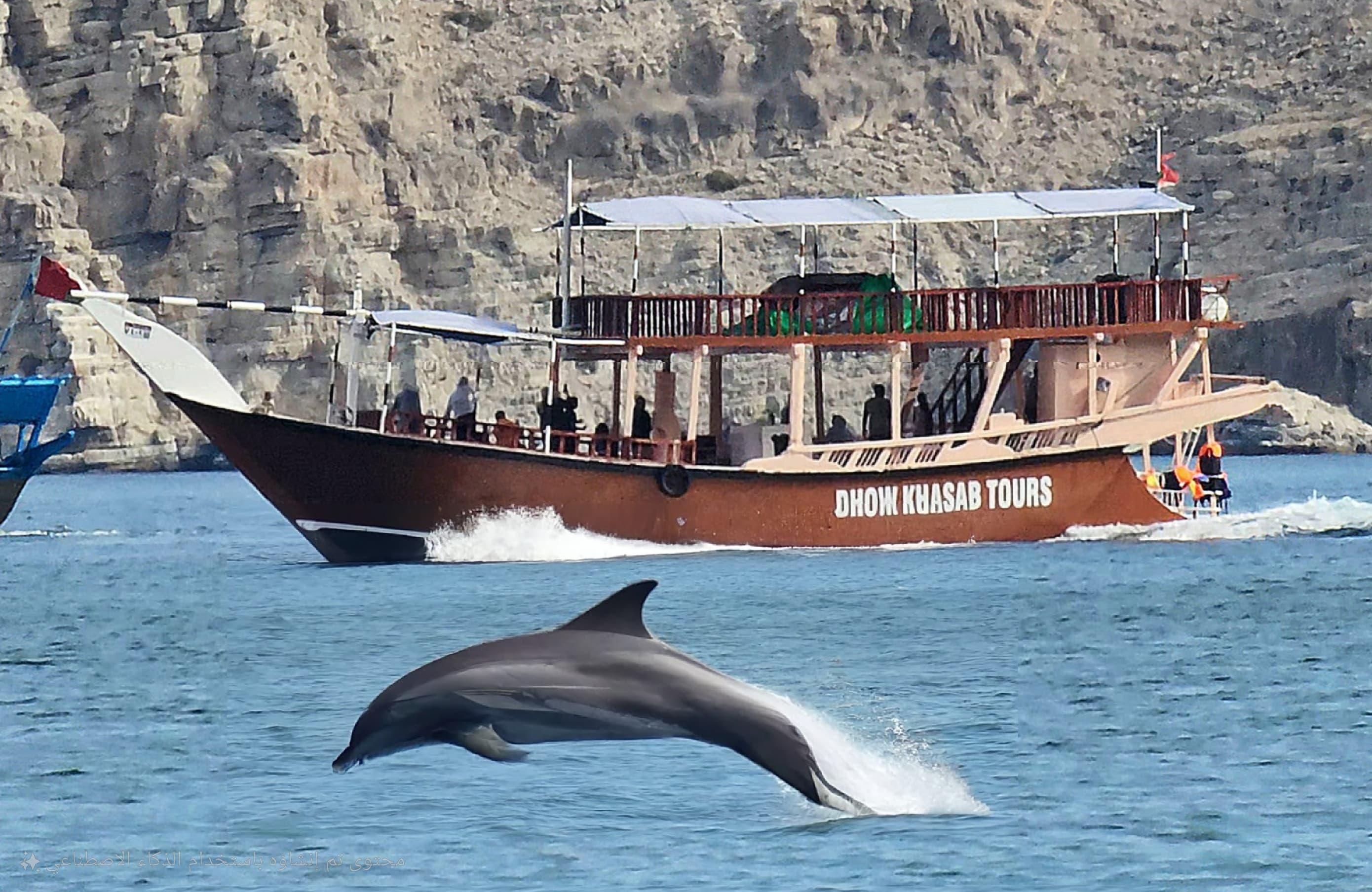
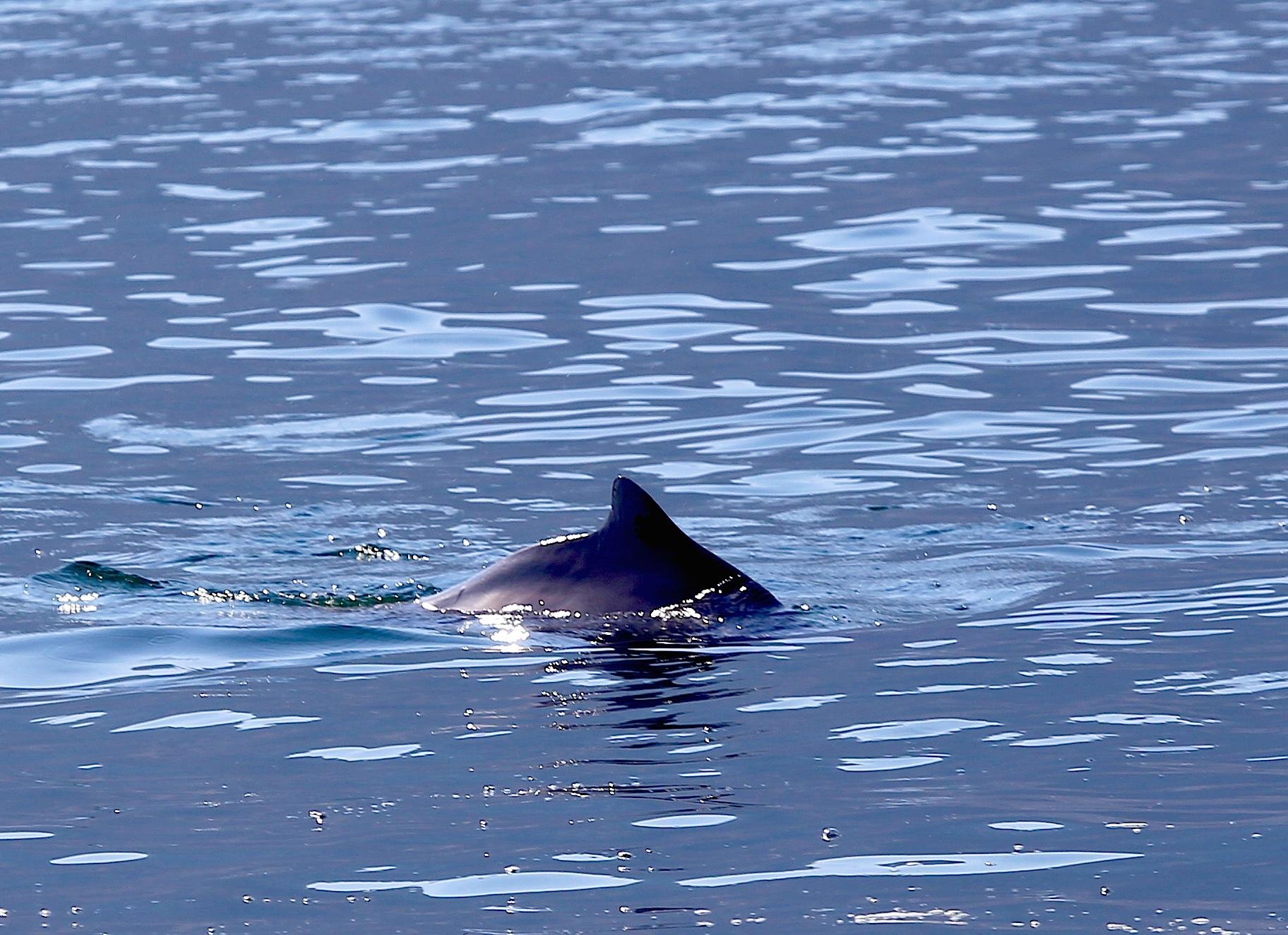
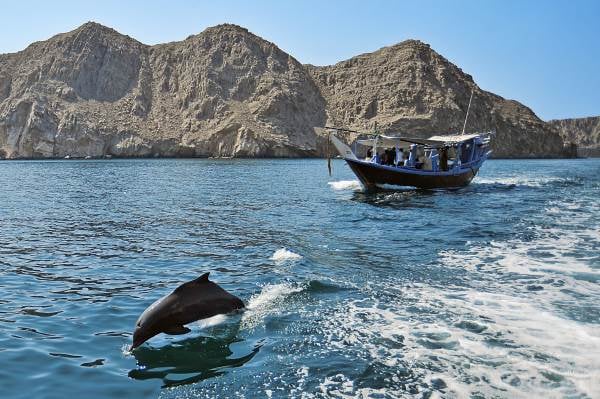
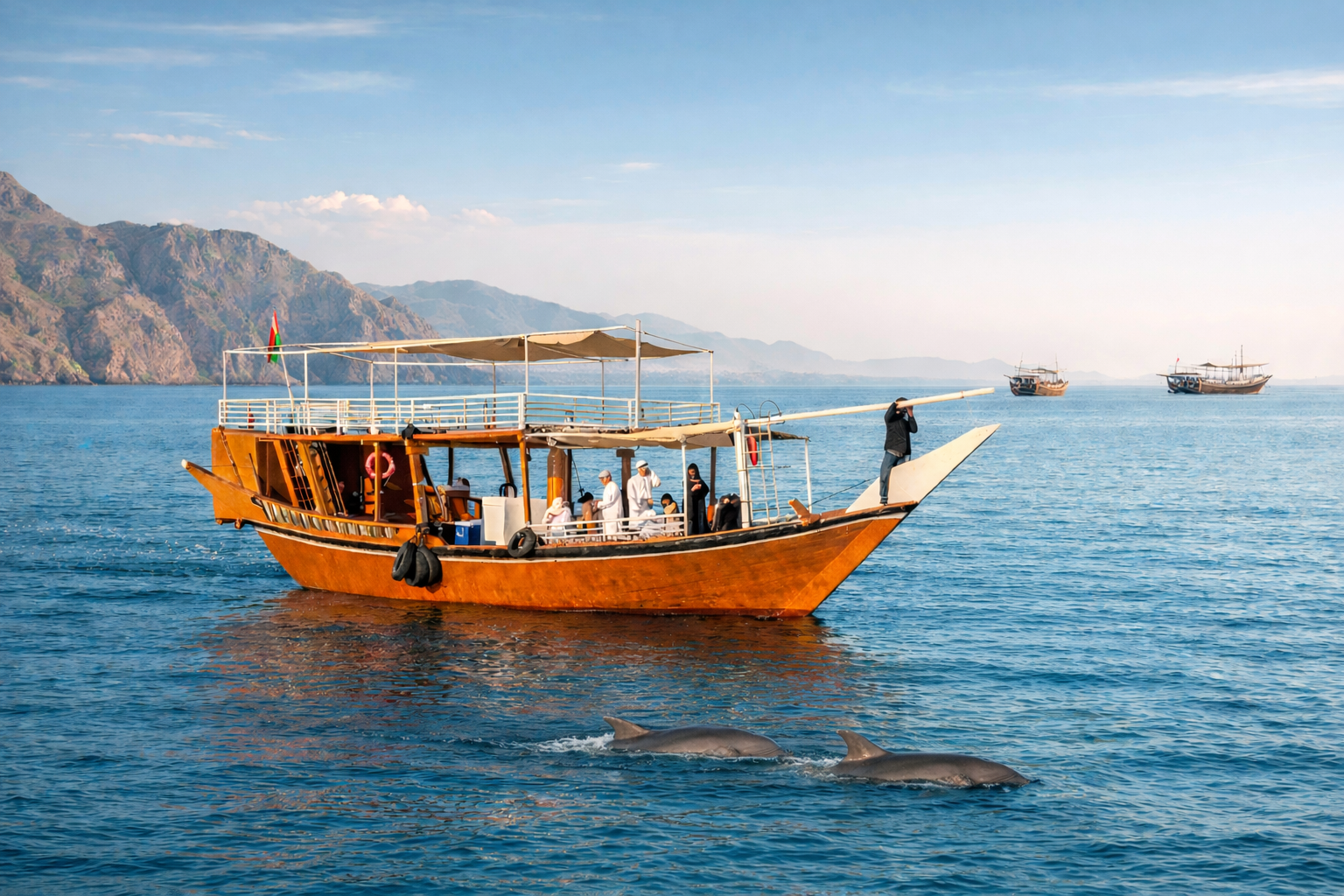
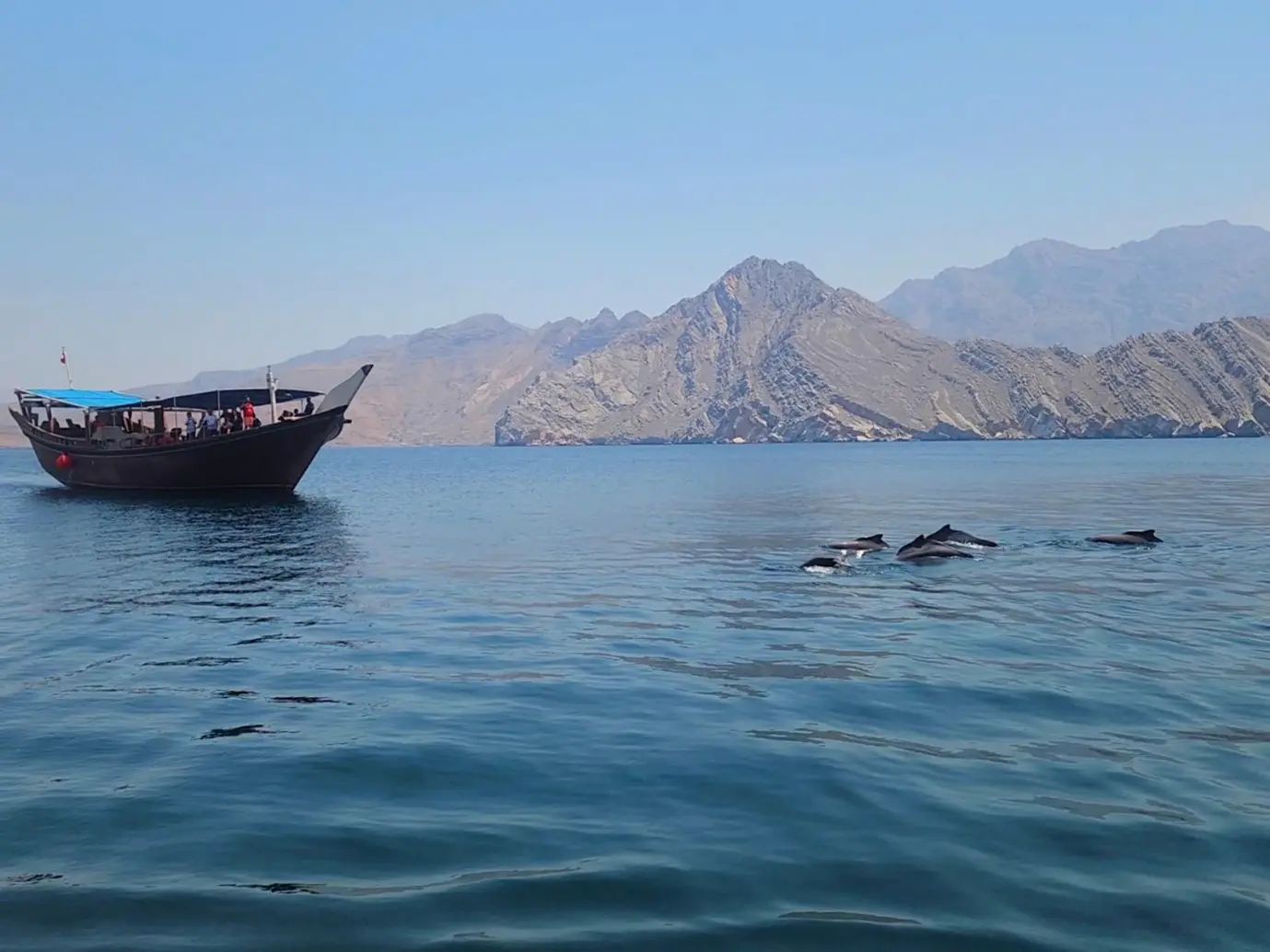
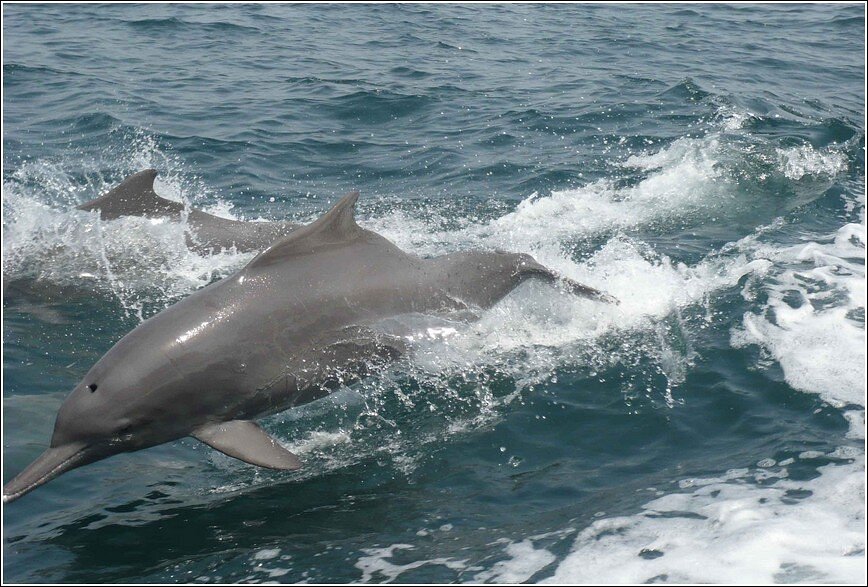
You spot the first dolphins an hour into the voyage — dorsal fins cutting the surface in synchronized arcs. The captain cuts the engine, and the dhow drifts while you lean over the rail, close enough to hear the click of echolocation beneath the water. The pod circles twice before vanishing toward deeper channels.
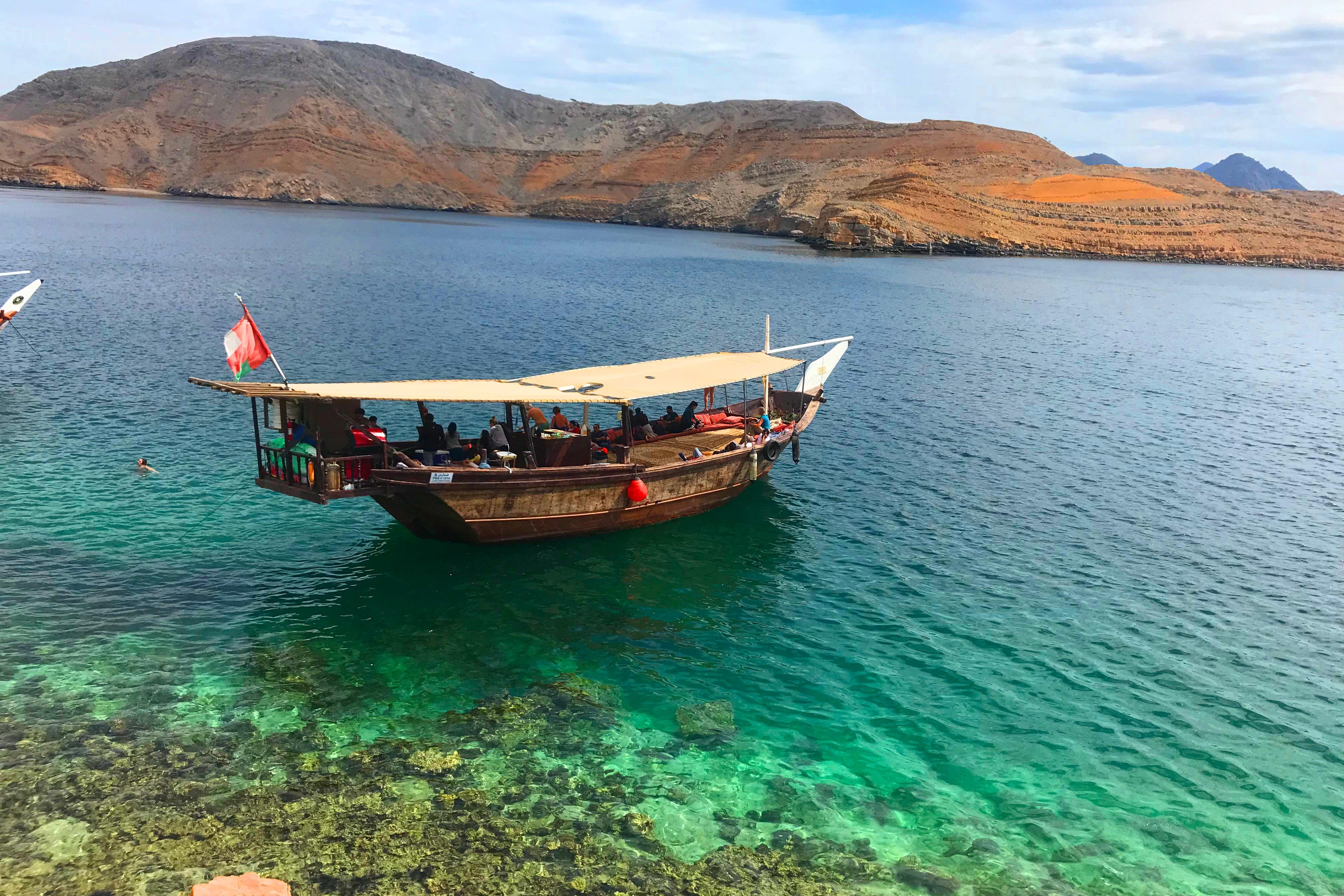
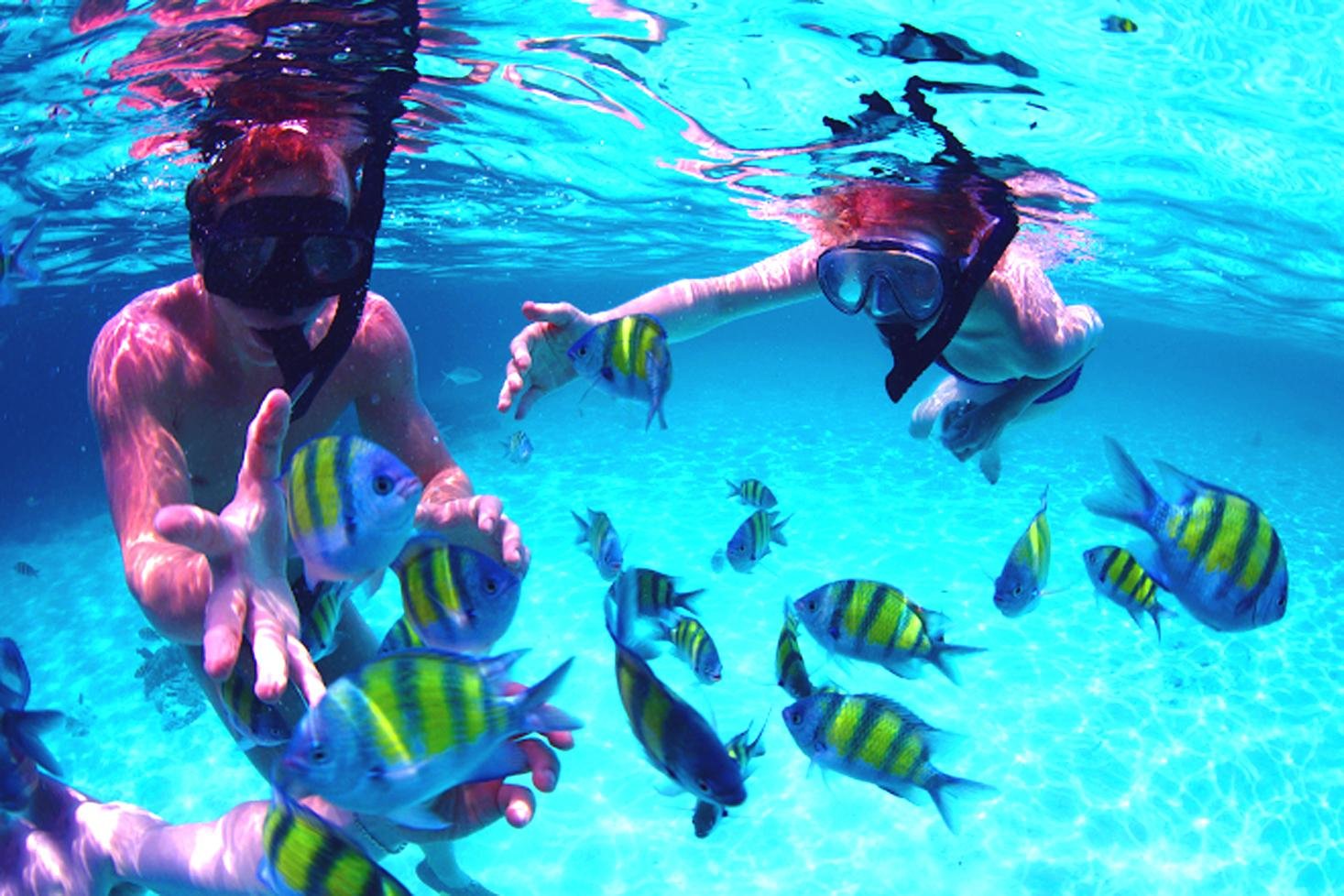
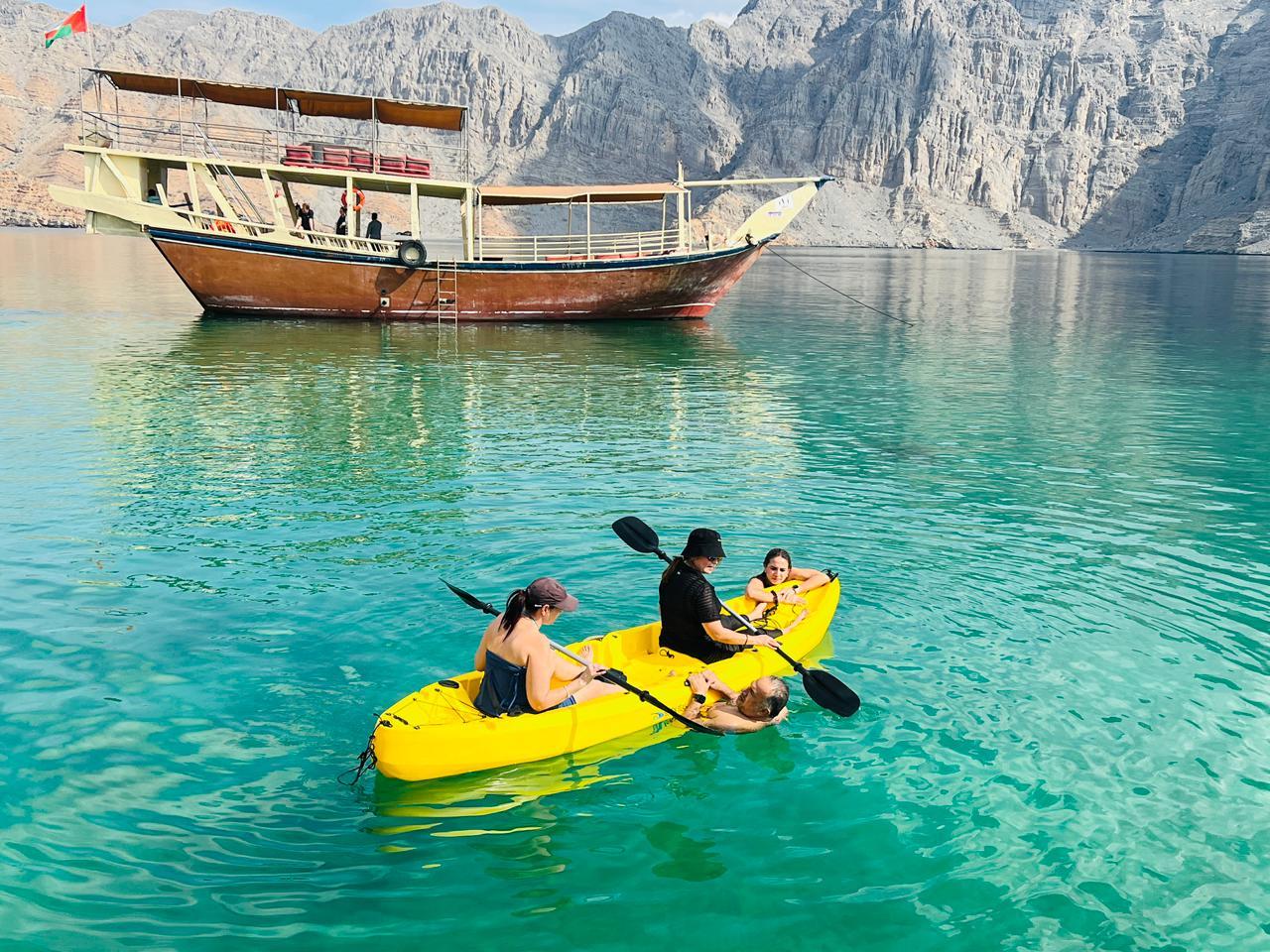
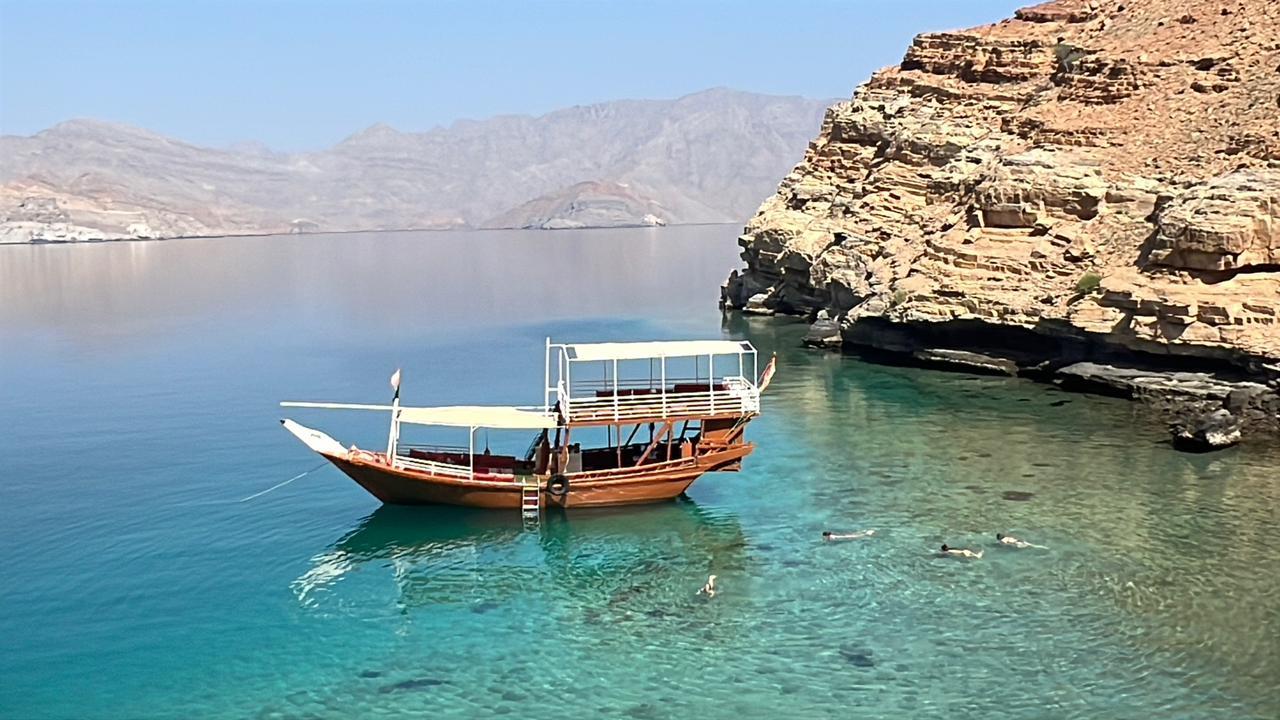
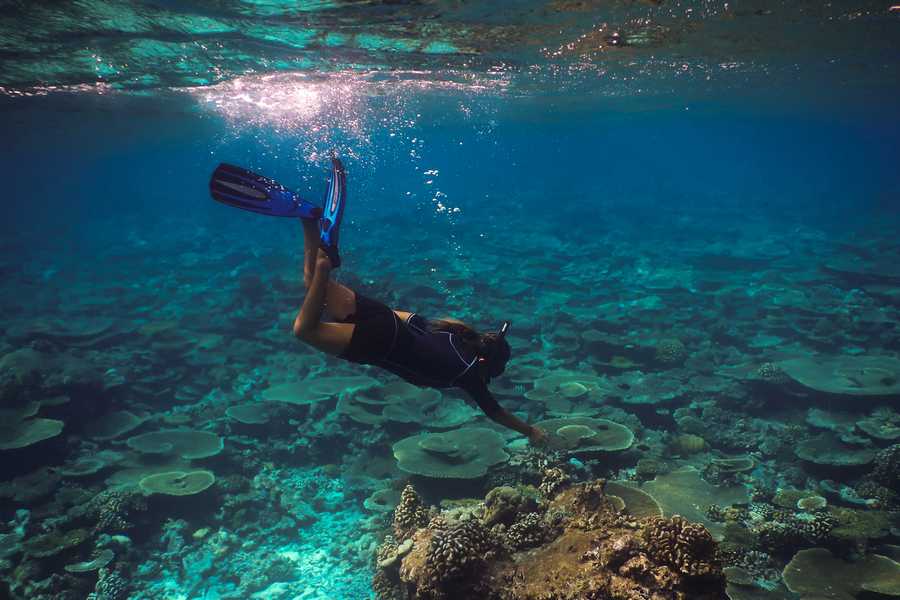
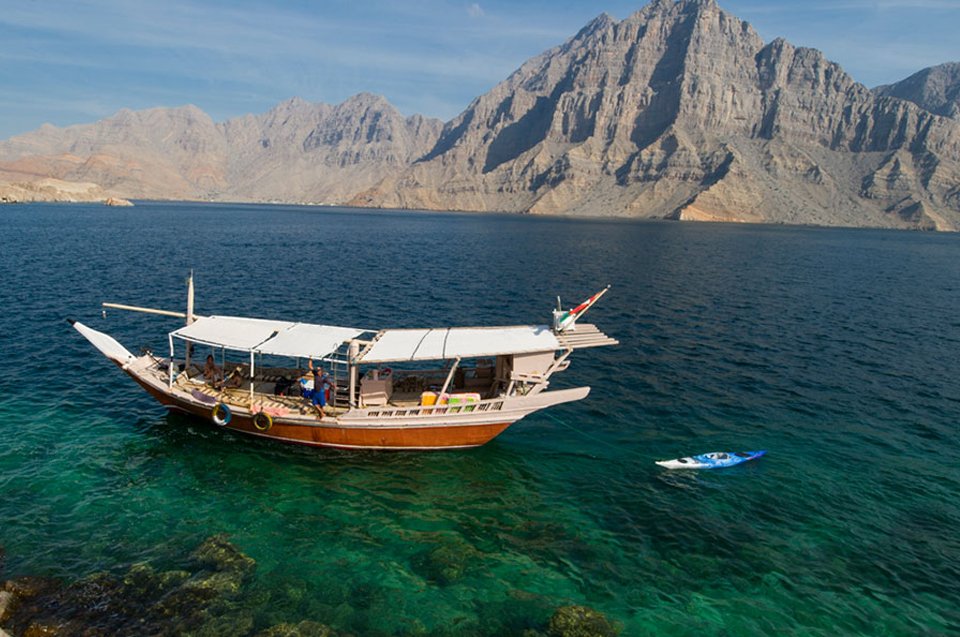
Mid-morning, the dhow anchors in a shallow bay. You pull on snorkeling gear and slip into water so clear you can count pebbles on the seabed four meters below. Sergeant majors and parrotfish dart between coral heads while the dhow's shadow rocks overhead. Back on deck, the crew lays out a lunch of grilled kingfish, saffron rice, and fresh limes. You eat cross-legged on cushions as the dhow motors deeper into Khor Sham, where the cliffs narrow to a slot canyon and the water turns jade green. The return journey passes Telegraph Island's ruined stone walls, and you dock back at Khasab by mid-afternoon, salt-dried and sun-tired.
All the details about your upcoming adventure in one place
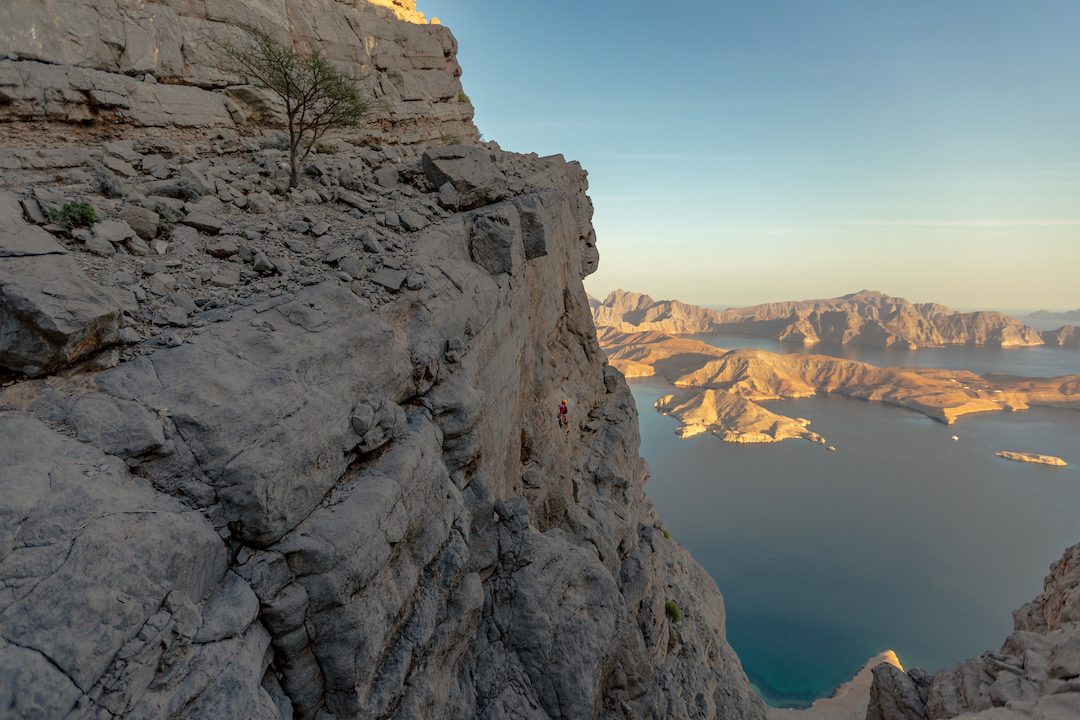
Khasab Port anchors a coastline that earned Musandam the nickname "Norway of Arabia" — though the comparison undersells the geology. The limestone massifs that plunge into the Strait of Hormuz are not glacial valleys but drowned mountain ranges, sculpted by tectonic uplift and marine erosion over 70 million years.
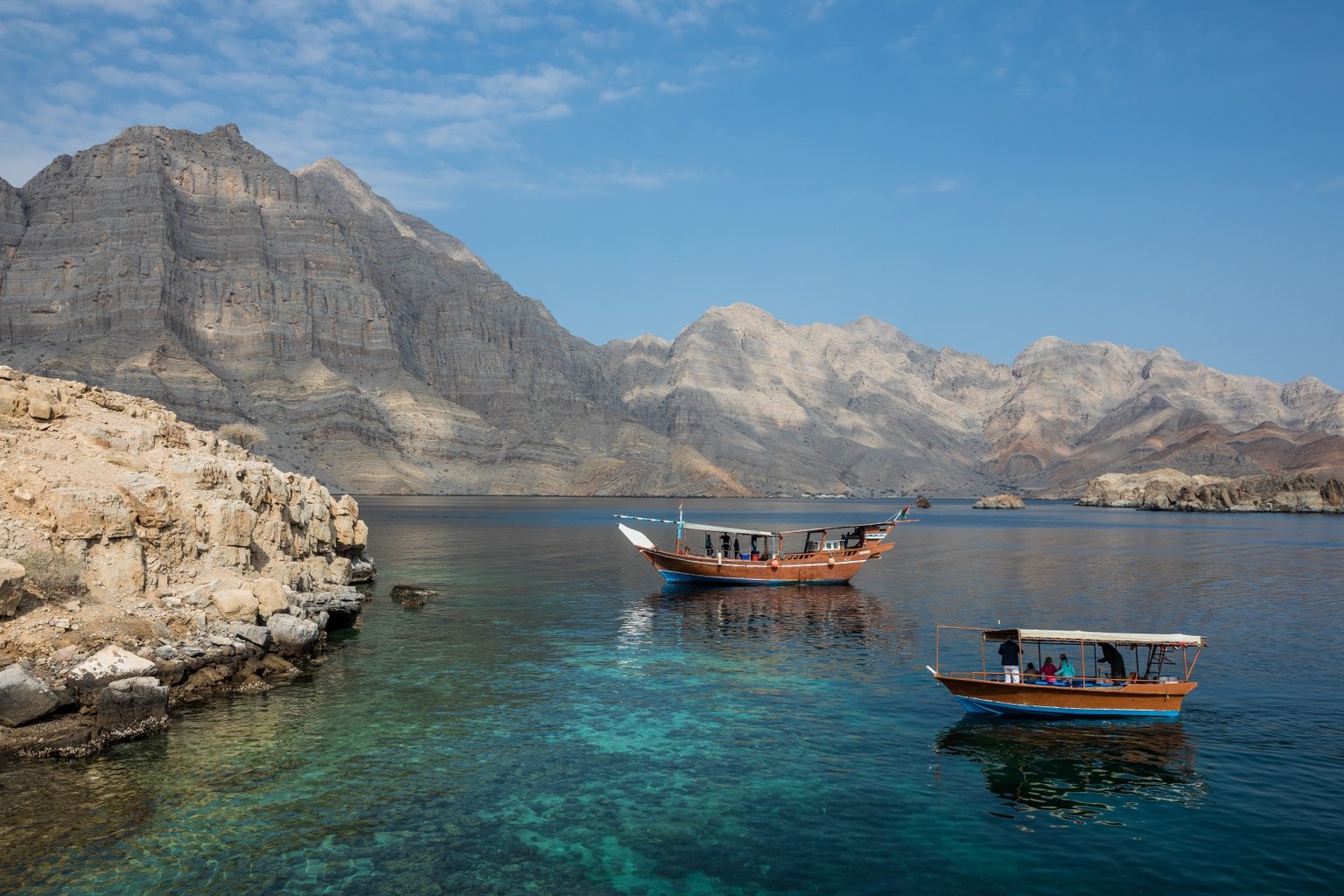
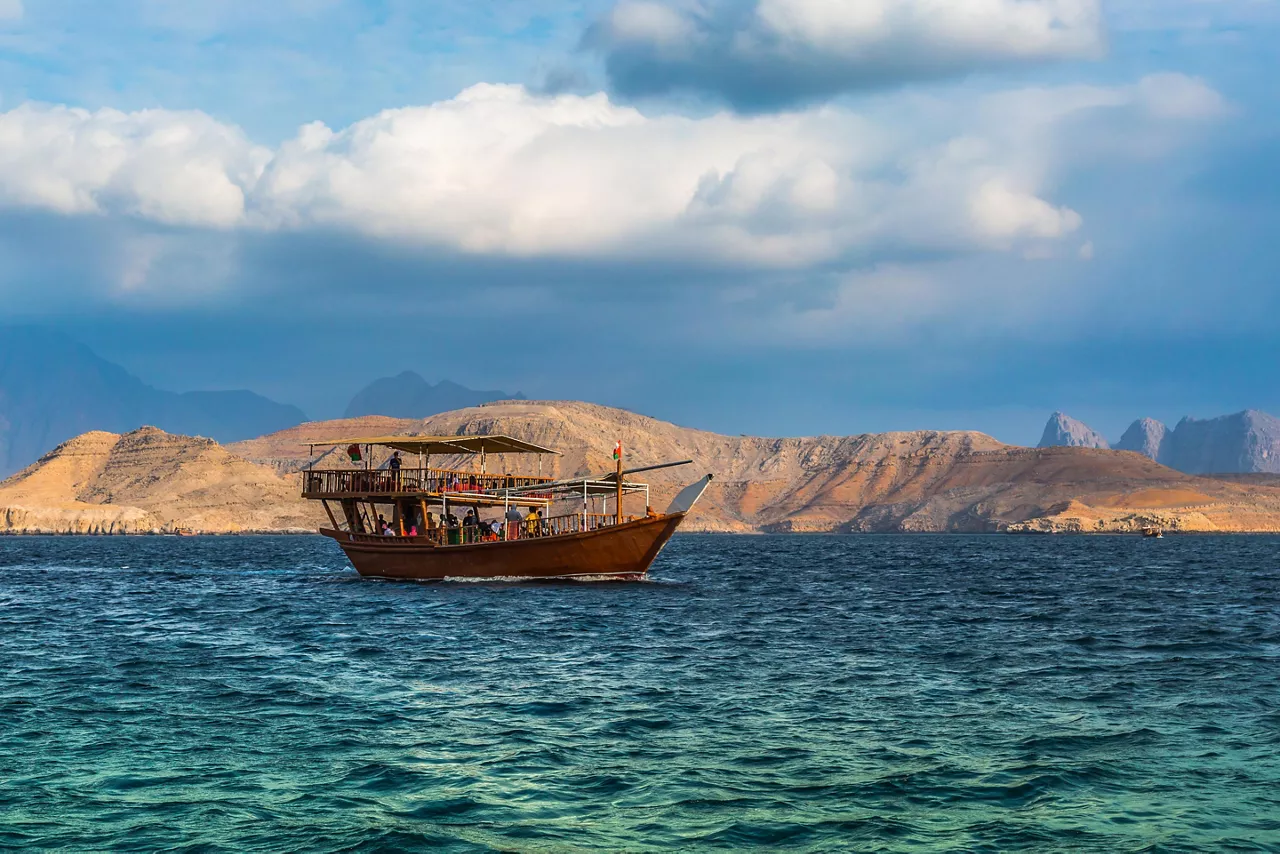
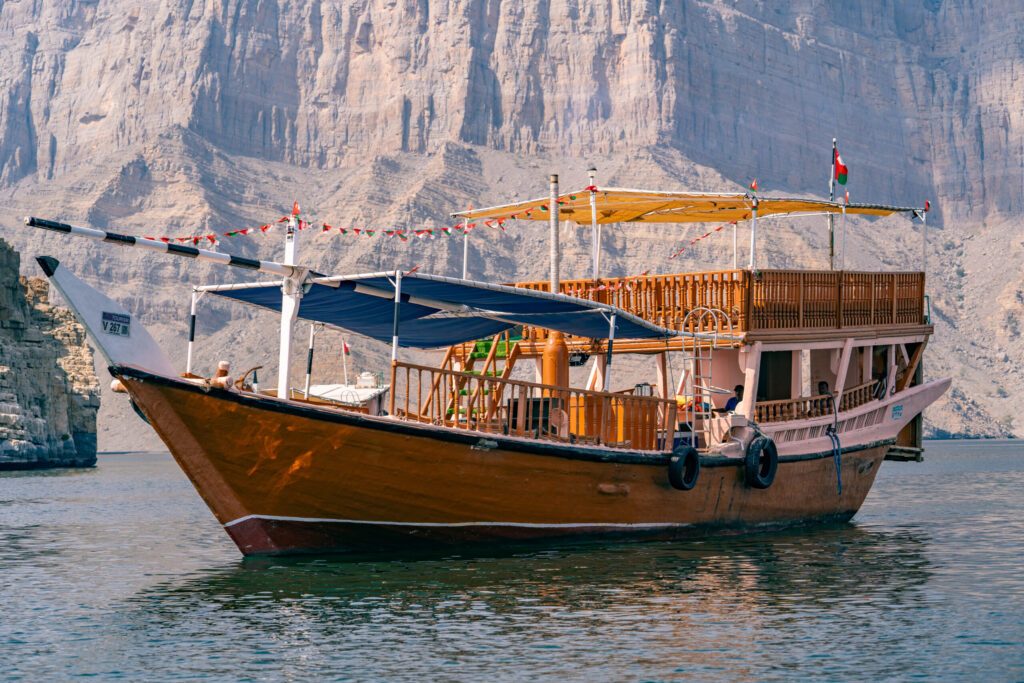
Traditional wooden dhows, built using techniques unchanged since the 16th century, navigate these khors — narrow inlets that slice inland for kilometers, their walls rising 300 meters above the waterline.
The Musandam Peninsula remained isolated until the late 20th century, accessible only by boat or mountain track. That isolation preserved both the landscape and the maritime traditions of the Shihuh people, who piloted dhows between Omani ports and traded frankincense, dates, and dried fish long before modern borders divided the Arabian Gulf. Today's dhow cruises follow routes once used for commerce, threading between Telegraph Island — a British communications outpost from 1864 — and fishing villages that cling to pocket beaches beneath the cliffs. Spinner dolphins hunt in pods of 30 or more along the strait's edge, often approaching within meters of dhow hulls.
A Musandam private dhow cruise typically departs from Khasab Port at 09:30, when morning light angles across the fjord walls and the gulf remains calm. Operators outfit dhows with cushioned seating, snorkeling equipment, and onboard kitchens that prepare fresh Omani lunches during the voyage. Routes vary by operator but converge on the deepest khors: Khor Sham, where goats graze on clifftop terraces, and Khor Najd, whose turquoise shallows shelter coral gardens. The dhow's diesel engine idles during snorkeling stops, and crew members prepare mint tea as the vessel drifts past limestone walls streaked with copper oxide.
The maritime heritage here is functional, not theatrical. Dhow crews are fishermen and sailors first, tour guides second. They read the water for dolphin activity, adjust routes based on wind direction, and point out the abandoned stone houses that dot the shoreline — remnants of villages evacuated when road access eliminated the need for dhow-dependent life. The cruises operate year-round, though summer heat exceeds 40°C and drives most tourism between October and April.

The limestone massifs that plunge into the Strait of Hormuz are not glacial valleys but drowned mountain ranges, sculpted by tectonic uplift and marine erosion over 70 million years.
Dress modestly in loose-fitting clothing that covers shoulders and knees when in public areas. Swimwear is permitted only while on the dhow or at designated swimming stops.
Keep all belongings in a single compact waterproof bag for your musandam private dhow cruise. Security may request to inspect bags before boarding.
Photography is encouraged during your musandam private dhow cruise, but please respect local customs by asking permission before taking portraits of locals. Avoid photographing military or government infrastructure.
The musandam private dhow cruise is suitable for families with children. Life jackets are provided on board and must be worn as directed by the crew.
Most dhows are traditional wooden vessels with limited accessibility for those with mobility challenges. Please consult your specific operator regarding boarding assistance.
Most tours provide an onboard buffet lunch and refreshments including water, tea, and soft drinks. Dietary restrictions can often be accommodated if requested in advance of your musandam private dhow cruise.
Opening Hours
09:30–16:30
Address
Khasab Port, Musandam, Oman
Accessibility
Varies by dhow vessel design
Best arrival
09:30–10:00
Storage
Not available at port
Region
Musandam Peninsula
Full refunds are typically available for cancellations made at least 24-48 hours in advance, depending on the operator. Entrance fee of 0 OMR does not apply as entry is free; tour packages are subject to individual operator terms.
Recommended time
Full day
A musandam private dhow cruise allows visitors to explore the fjords of the Musandam Peninsula, typically requiring six to seven hours to fully experience the remote coastline and snorkeling spots. While the Khasab Port terminal maintains steady operations throughout the day, choosing musandam private dhow cruise tours in the morning minimizes exposure to afternoon heat. Securing your musandam private dhow cruise tickets in advance helps bypass logistical delays at the harbor, ensuring a smoother transition from land to sea for your Khasab boat excursion.
Crowd levels through the day
The Musandam Peninsula's maritime heritage stretches back millennia, when Stone Age fishermen carved petroglyphs into cliffsides overlooking the Strait of Hormuz. By the 16th century, Portuguese navigators charted these waters as the "Cape of Musandam," recognizing the strategic narrows where dhows—traditional wooden vessels with lateen sails—ferried frankincense, dates, and textiles between Persia and the Arabian interior. The dhow itself evolved from Indian Ocean trading designs, its shallow draft and flexible rigging ideal for navigating Musandam's fjord-like khors (inlets) where deeper-hulled European ships could not venture. British Admiralty surveys in the 1820s documented over 200 active dhow routes threading through Telegraph Island and the limestone pillars of Khor Ash Sham. Yet by the mid-20th century, motorized vessels and Gulf oil wealth nearly erased the dhow fleet; by 1970, fewer than a dozen working dhows remained in Khasab. Omani unification under Sultan Qaboos that year triggered a cultural revival: the Ministry of Heritage mandated dhow-building apprenticeships in 1975, and Khasab's first tourism charter—a restored teak boom carrying 12 passengers—launched in 1983 under the fledgling Musandam Sea Adventures cooperative. The modern musandam private dhow cruise industry crystallized after 1992, when the Sultanate opened Khasab Port to international yacht traffic and licensed the first wave of family-run operators. A 2003 maritime safety decree required all tour dhows to retrofit life vests and VHF radios while preserving traditional hull profiles, balancing authenticity with regulation. Today's musandam private dhow cruise tours depart from a renovated wharf where craftsmen still caulk planks with sharki (fish oil and lime), sustaining techniques documented in 9th-century Arab sailing manuals. Operators now offer full-day and half-day musandam private dhow cruise tickets, with routes threading past pod of spinner dolphins and snorkeling stops in Telegraph Island's turquoise shallows—a living continuum of Strait commerce reimagined for discovery rather than trade.
Neolithic fishing communities establish seasonal camps along Musandam's khors, leaving shell middens and stone anchors.
Portuguese cartographers map the Strait of Hormuz dhow routes, naming the peninsula's northern cape.
British Admiralty charts document over 200 active dhow trading passages through Musandam's inlets.
Omani unification under Sultan Qaboos begins; fewer than 12 working dhows remain in Khasab's fleet.
Ministry of Heritage launches dhow-building apprenticeship programs to preserve traditional boatwright skills.
Khasab's first licensed tourism dhow, a restored 12-passenger teak boom, begins charter operations.
Khasab Port opens to international traffic; Sultanate licenses the first wave of family-run dhow tour operators.
Maritime safety decree mandates life vests and VHF radios on all tour dhows while preserving hull authenticity.
Capture the contrast between the ancient stone structures and the deep blue fjord waters from the bow of the boat. Stand near the railing on the upper deck to frame the island against the surrounding limestone cliffs during your musandam private dhow cruise.
Shoot the towering, rugged geology from the side deck to emphasize the scale of these dramatic geological formations. Using a wide-angle lens helps capture the reflection of the mountains in the calm waters, a highlight of musandam private dhow cruise tours.
Position yourself at the front prow for the clearest view of marine life breaking the surface. This vantage point provides the best angle for action shots of pods swimming alongside the traditional vessel on your musandam private dhow cruise tour.
Photograph the wooden hulls and intricate carvings of the fleet docked at the harbor before departure. This location offers a steady platform to secure musandam private dhow cruise tickets or adjust camera settings before entering the open sea.
Exploring the fjords via a musandam private dhow cruise offers a calm environment for children to observe marine life from the safety of a traditional boat. These musandam private dhow cruise tours allow families to navigate the limestone cliffs at their own pace.
Traditional wooden boats provide limited natural cover, so bring wide-brimmed hats, high-SPF sunscreen, and light long-sleeved clothing to protect children from the direct sun. Consider booking musandam private dhow cruise tickets that specify an indoor cabin area for midday relief.
The open deck layout requires constant supervision for toddlers near the edges of the vessel. Ensure all children are fitted with age-appropriate life jackets before the musandam private dhow cruise tour departs Khasab Port.
Public restrooms are available at the port before embarkation, but vessels lack formal baby-changing stations. Pack a portable changing mat and dispose of all diapers responsibly to maintain the cleanliness of the Omani waters.
Morning departures are highly recommended as the sea remains calm and the wildlife activity is higher. Keeping the excursion duration to a half-day helps prevent fatigue for younger participants who may find the quiet boat journey monotonous after several hours.
Finding a meal near your musandam private dhow cruise is straightforward, with several reliable eateries located just outside the harbor area. Whether you want to grab a quick bite before boarding your musandam private dhow cruise tours or sit down for a local meal after returning to land, the town offers convenient options that serve fresh catches and traditional flavors.
Located just outside the harbor, this spot is ideal for picking up high-quality kebabs and fresh tea before your musandam private dhow cruise tour.
Everything you need to know for your journey
The port is accessible daily from 09:30 to 16:30.
There is 0 OMR entrance fee; however, tour operators charge for private dhow cruise packages.
Aim to arrive between 09:30 and 10:00 to increase the likelihood of dolphin sightings and enjoy calmer sea conditions.
Yes, families are welcome and operators provide life jackets for children on the cruise.
Bring your original passport, sunscreen, swimwear, towel, and comfortable attire for the sea.
Yes, you can secure musandam private dhow cruise tickets through authorized local tour operators.
Accessibility depends on the specific vessel, as traditional dhows may have limited features for mobility-impaired guests.
Most travelers require an Oman entry permit or visa; check your nationality requirements before traveling to the Khasab border.
Yes, Khasab Fort is a historic landmark nearby that provides excellent cultural context after your cruise.
Join thousands of happy travelers who have discovered this incredible experience
Book Your Experience Now